With the boom of running it’s understandable that finding the right running shoe can be quite the mission. With brands and influencers all over social media telling you about the latest releases it really can be a mind field. Where do you start!!!
For me there is no better place to go that a specialist running retailer, I prefer independent over the large multi national retailer, you know that they are giving you unbiased advise on the products and are unlikely to oversell to you as it is their business/reputation on the line and not one owned by share holders and banks. What might the trendy and best selling shoe might not be good for you, I bet you that most people that are wearing the adidas EVO SL shouldn’t be, I’m not saying its a bad shoe at all, I know a few runners that rate it highly but it is right for their running style, it wont be right for everyone wearing it, just have an open mind and don’t just buy what you’ve seen online.
My go to store is About the Run in Kingston, what Fran and Hannah don’t know about running isn’t worth knowing, they also have a great running community with a run club on Tuesday nights. Lupo their dog is also a reason to visit.
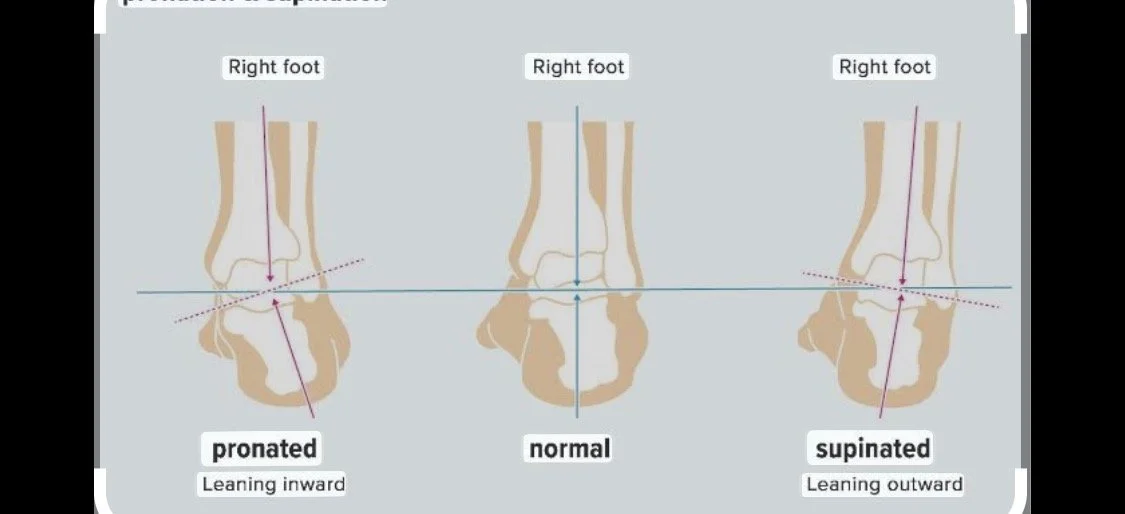
But I digress, getting a gait analysis is a good place to start. There are more and more ways that this can be done but they basically get to the same result. The main focus is at the foot/ankle and they will be looking for how much your foot pronates(more on that at a later date) this is to allow the assistant to know what category of shoe to put you in, the main two are “Neutral” or “Stability”. Simply put the shoe does what the foot doesn’t do, it can’t support you and absorb impact.
Neutral- If you have a neutral gait then your foot supports you well but doesn’t naturally absorb impact so you need a well cushioned shoe that has a bit of flexibility to it.
Support-If your foot rotates inwards beyond a certain degree then you may need a bit of support in your shoe, this can be done may ways like the use of “Guide rails” “Medial Posts” etc There are also some neutral shoes that are quite supportive so talking to someone with good shoe knowledge is important.
Once you know what category of shoe you need to be in the following factors need to be taken into account.
What Size!!- You are not the size you think you are, its natural that you would go for the size that you wear for your daily shoes but with the impact side of running you need to allow space for your foot to swell when hot, plus your foot is your bodies built in cushioning system so it naturally splays around the forefoot so you need space to allow it to do so. Those black toenails you’ve had are probably caused by a sizing issue. There is so much inconsistency in sizes, I’m anything from an UK8 to 9.5, the 9.5 are normally race shoes.
What shoe- There are so many options available these days it can be hard to know where to start. Things to take into account are what are you going to do in the shoe, what terrain you will be running on, are you training for something, is a goal time involved. It can be counterintuitive to think that lightweight is best, it could be for races or tempo sessions but not for a daily shoe as you generally find that those types of shoes aren’t as durable as a daily milage shoe.
What Brand- There are more and more brands coming to market as the running boom continues, there are no good or bad brands you just
need to work out what works for you, there can be a lot of trial and error of finding the right shoe.
This isn’t a complete guide but I hope covers the important parts of choosing a shoe. If you have any questions please feel free to contact me.
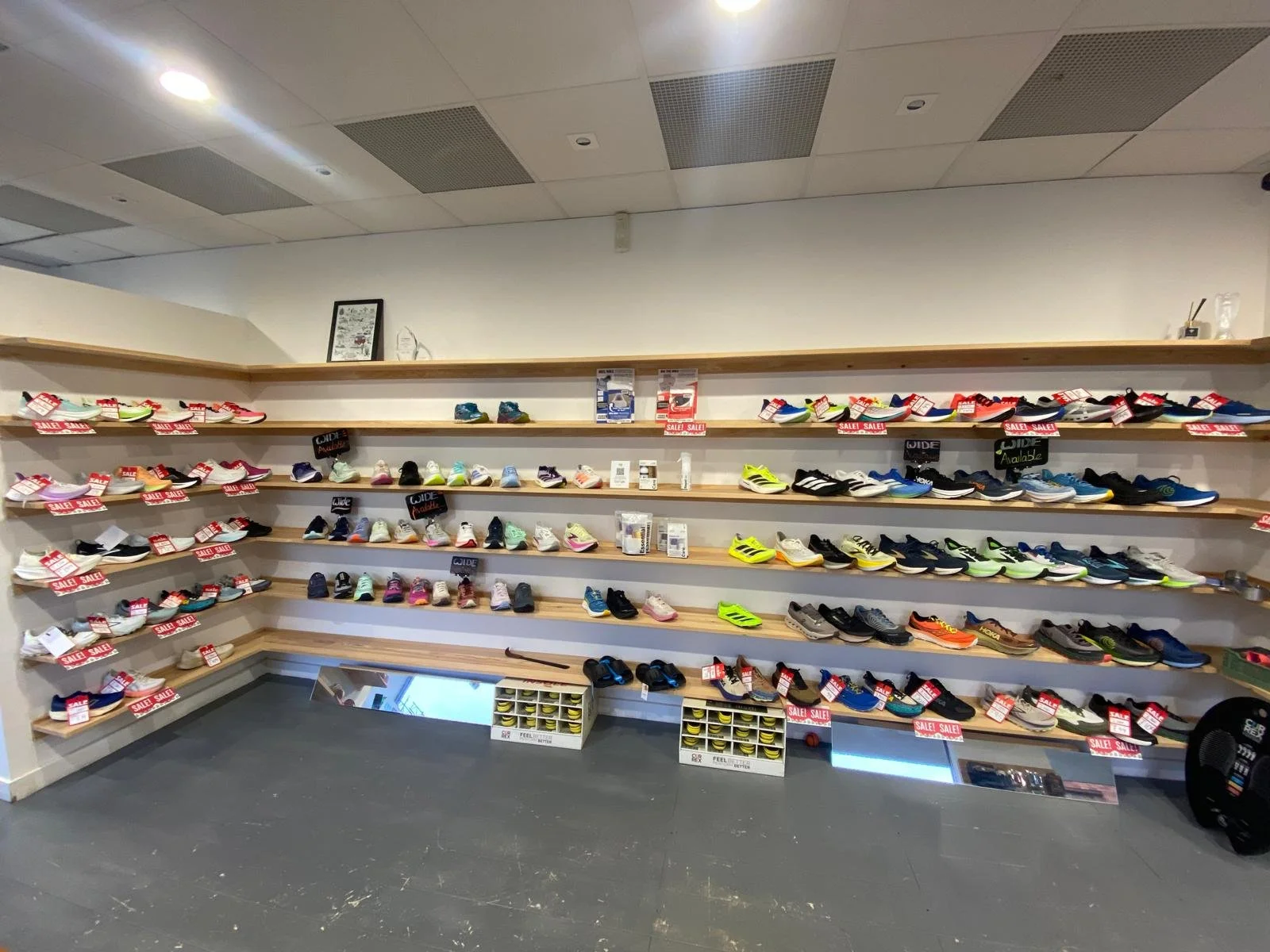
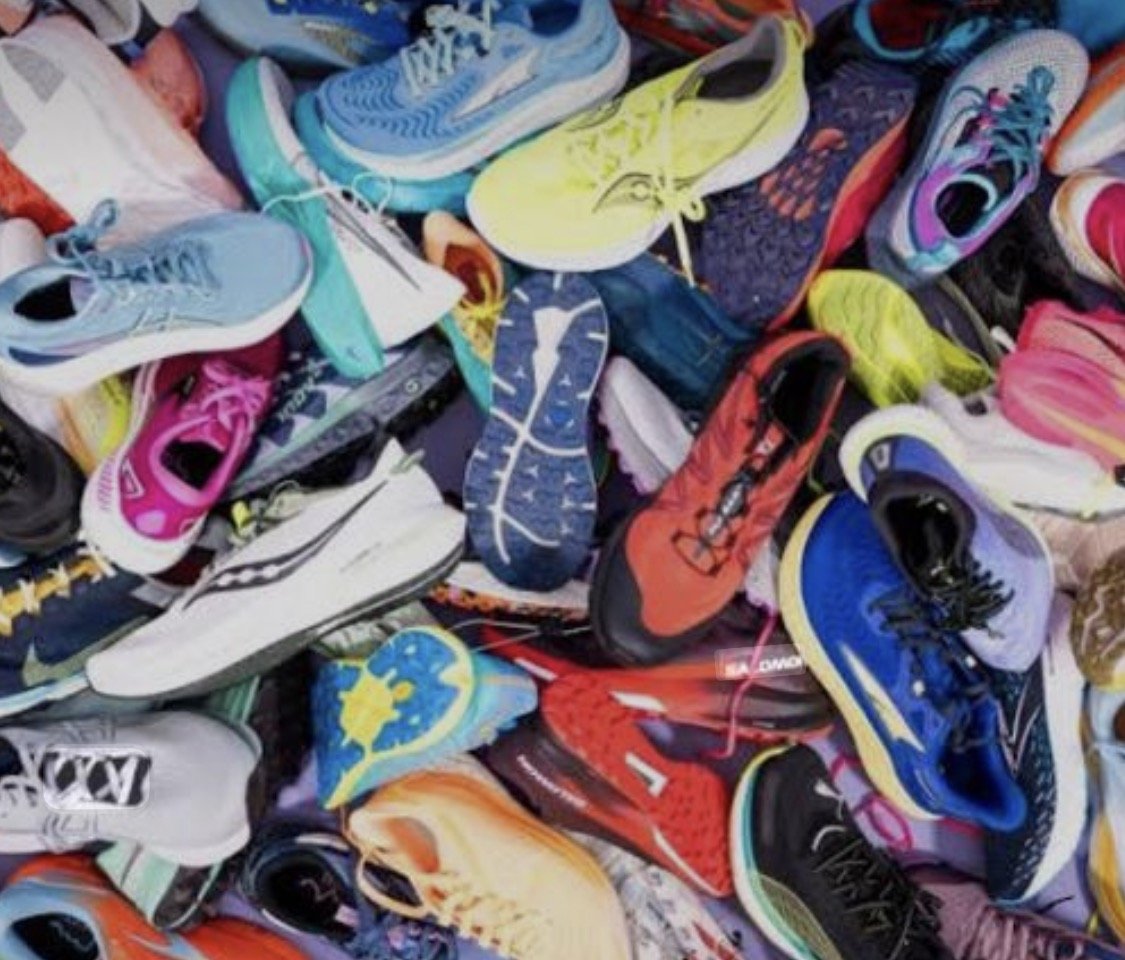
“To Carbon, or not to carbon, that is the question”
Plated shoes came into play back in 2017 when Nike chose 3 athletes to attempt to break the 2 hour marathon, they spared no expense. On this occasion it wasn’t to be but it brought to everyones attention that shoes with carbon plates embedded in special midsole foams can make you run faster, or as some put it run more efficiently as its hard to really prove that they will make everyone faster, need to be careful of lawsuits!!
When it was only Nike producing these shoes there were not enough to go around but now mosts brands produce them they are readily available, BUT should you be using them?
For the most part I don’t think shoes cause injuries, more often than not runners pick up issues through over training, be it increased frequency, increased duration and intensity or all even a combination of all three but when it comes to carbon shoes I think that they can cause injuries if on the wrong feet.
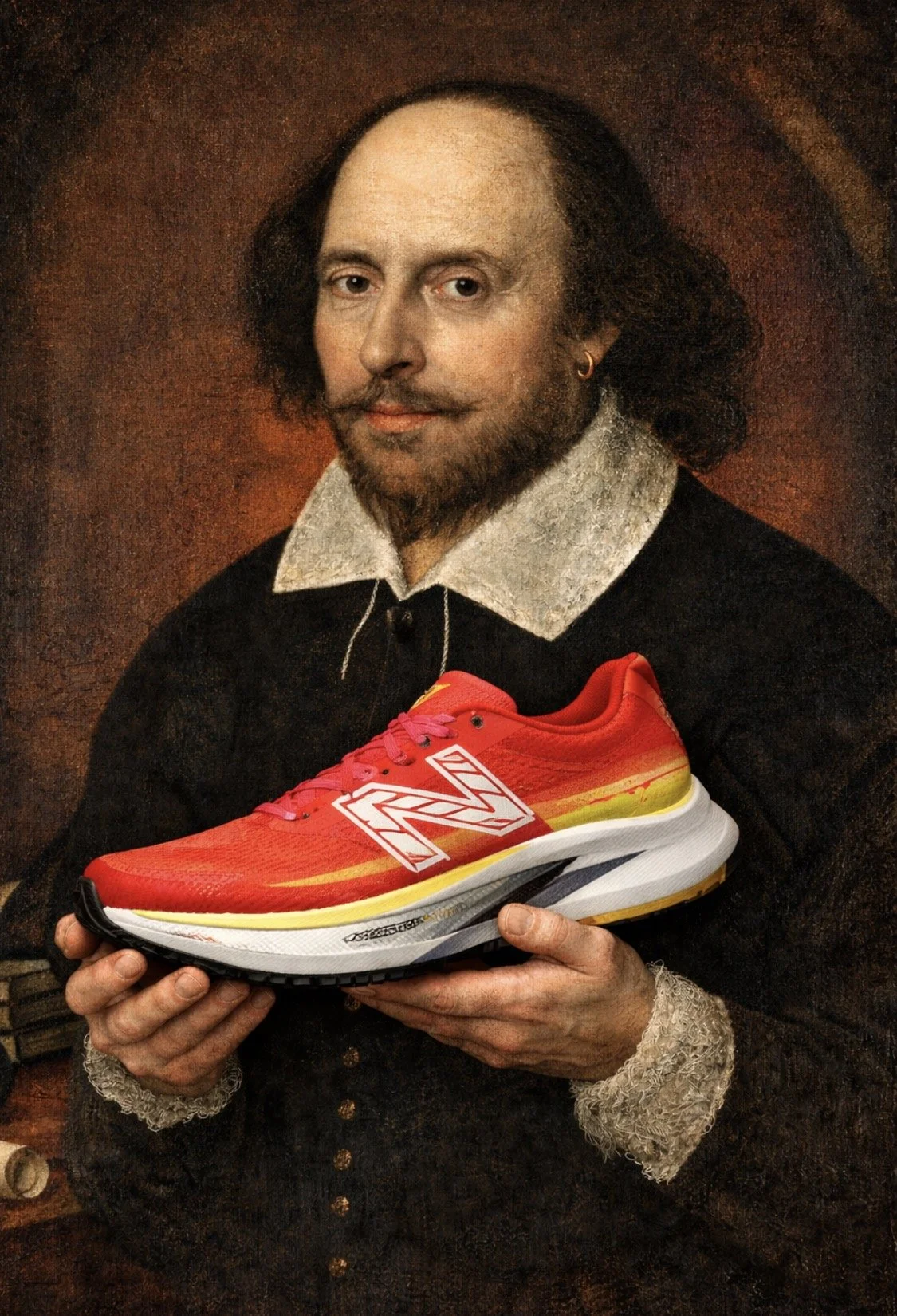
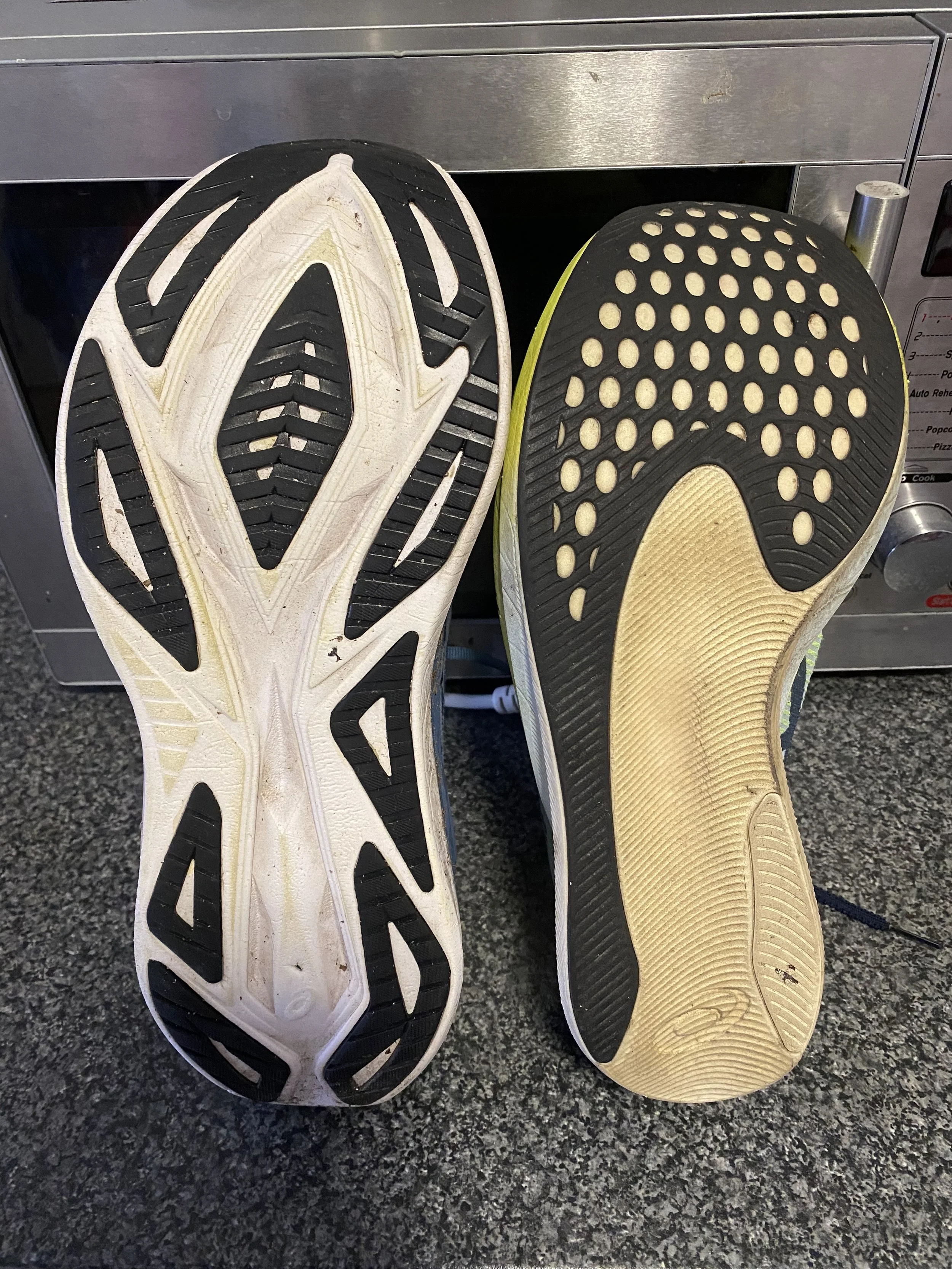
These shoes have been designed for racing so they should really be used for high tempo training and racing only not as a daily shoe. Some of the reasons are, they are expensive and not very durable so unless you want to keep buying more often then use them sparingly, durability does depend on a few things, the size of the runner for one. Most racing shoes aren’t that stable due to the softness of the midsole foam and big cut outs in the midsole(more weight saving) The picture on the right, no not the of Shakespeare, the one after William shows the Asics Superbalst 2(left) a very good daily shoe that you can pick up the pace in and probably race in, you can see that the shoe in general is much wider(more so in the mid-foot area) making it more stable than the Asics Metaspeed Sky on the right which is one of their race shoes, note how much narrower it is from the heel to the mid-foot. When racing at the speeds the elites do their feet aren’t in contact with the ground for as long as a period as the general publics so the shoes don’t need to be as stable.
So, should you, or shouldn’t you??
Over the years in retail I have always be truthful when selling shoes and if a customer has come in asking for a carbon shoe for their first marathon my first question is “what is the goal” is it to get a time or just to survive and finish. The answer to that will dictate how I proceed, some will except my advice other’s wont but if your answer is to survive and finish then a carbon plate isn’t for you, you really want comfort and stability if you’re going to be on your feet for that amount of time.
Simply put when running in a plated shoes your foot doesn’t work how its designed to, the foot is the bodies natural cushioning system and when a carbon plate is put underneath it is loses its ability to pronate effectively, the load that doesn’t get absorbed has to go somewhere else and that place is your lower leg, the calves, achilles, peroneal’s to name a few of the muscles that have to work extra hard to provide ankle stability. How many of you have had super tight calf muscles after using a plated shoe for the first time? There are many more muscles that act as stabiliser when you run but just wanted to focus on what I have seen most often both in the shop and on the massage table.
In my opinion if the below are your goal times and you’re there or there about’s and are looking for that final piece of the jigsaw then I think you’re in a good place to go to a carbon plated shoes.
5k - Sub 20 mins
10k- Sub 40mins
Half Marathon- 90mins
Marathon- Sub 3 hour
If you are currently running 5K in 31 mins in a Brooks Ghost could you go sub 30 in a carbon shoe, probably yes, it doesn’t mean you should.
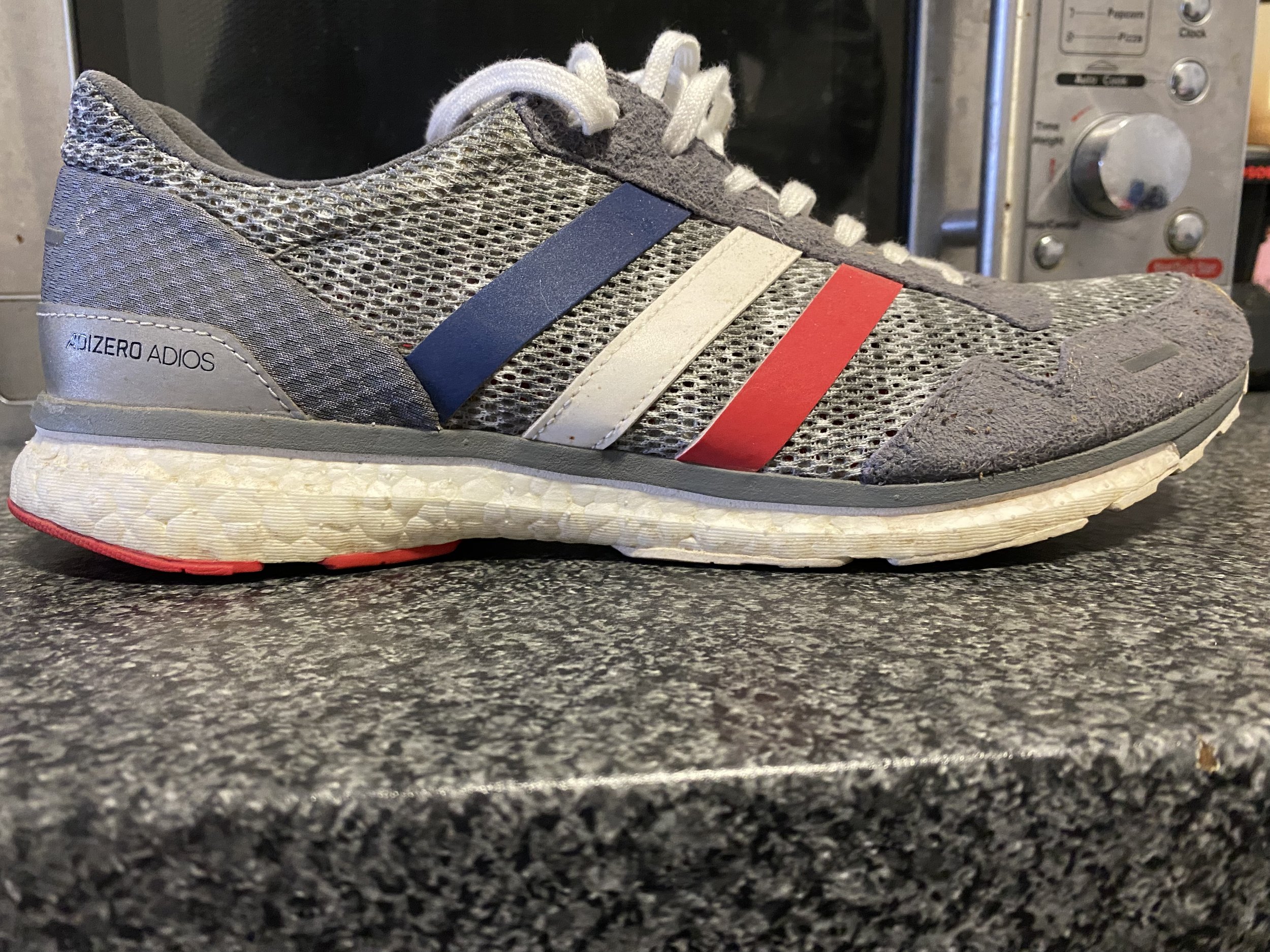
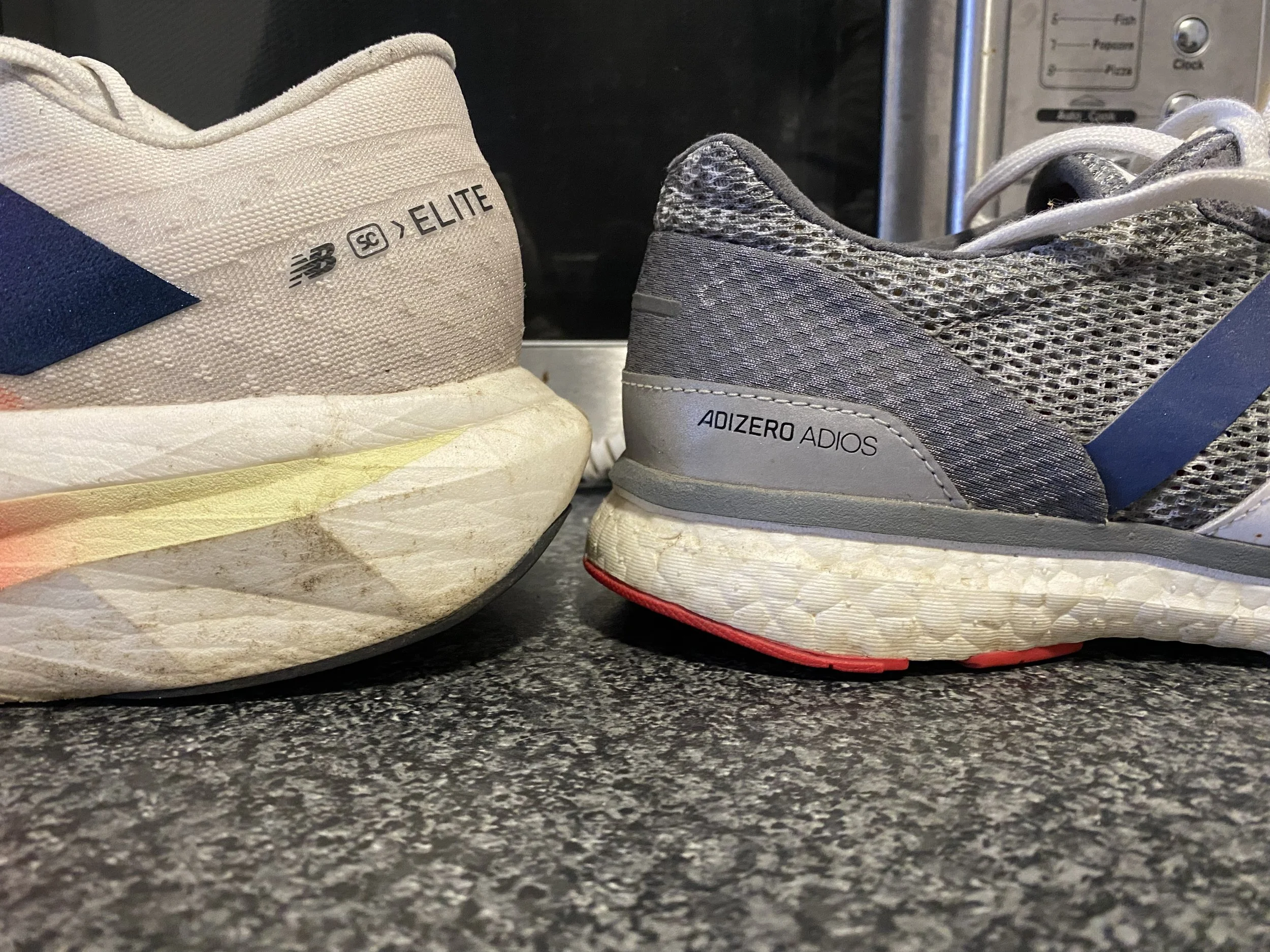
The 3rd picture down is my Marathon PB shoe which is 3:18 run in Berlin in 2018. the last picture compares my old race shoe to my current race shoe, lots have changed but I am showing this because you can run fast in other shoes, the majority of runners can achieve their goals with hard work, so many of us shouldn’t be using therm but the industry only tells us that they make you faster or more efficient to make sales, should they have more responsibility to tell you the potential pitfalls of running in them?
As with everything there are always exceptions when we are dealing with the human body. Some will benefit more than others, some will get injured and some won’t I just want runners to be able to make a more informed ch
Writing is not a strong point of mine which is why I’m challenging myself to write these posts, if there is anything that isn’t clear or if you have any questions please feel free to contact me.
Thanks for reading
Nick
Pronation- Friend or foe?
Over the years I think that lots of runners think that pronation is bad or wrong and in most cases they couldn’t be be further from the truth.
Your foot can do one of two things, it can either support you or absorb impact, pronation is your bodies built in cushioning system, how can that be bad?
The foot absorbs impact by pronating or to be a little geeky the 3 dimensional inward rotation of the foot. Why is it three dimensional I hear you ask, well the foot is going downwards, inwards and forwards at the same time.
The thing with the human body is that what might cause issues for one may not cause issues for anyone else. 15% degree of pronation is what is deemed to be the acceptable amount of pronation that the foot should do to be able to absorb the forces while running and to still be able to maintain proper alignment of the ankle and the leg, but there always exceptions to the rule.
The picture below shows the three types of gait
T
Pronation in its own right isn’t a problem but it can become a problem when you change something, and from a running point of view this can come from increasing your milage too quickly, its doesn’t matter what you’ve got on your foot if your body isn’t used to something then that is where an issue can arise. it can be very easy to buy a new shoe, run more than you ever have and then blame the shoe when you get injured, it is more often than not user error!!
There is a ”support” category of running shoes that aid in reducing the amount of pronation the foot does, these can help keep your legs more aligned and hopefully work more efficiently and reducing stress on the muscles in your legs. Brands use certain devices to help control your foot, these can be come in form of dual density midsoles, guiderails to name a couple but there are shoes that fall in the neutral category that are quite stable as they have a firm midsole or a wide outsole.
As always I would go into a shop and speak to a human if you don’t know what you need or don’t know what is out there that could work for you. Don’t follow trends, they may be good shoes but also may not be what you need.
I try and keep my blog posts short, simple and easy to understand, please feel free to contact with any questions.
Lastly, don’t wait until you get injured to get a sports massage, they can form a major part of maintenance as well.
Thanks Nick
Happy Running